How Automatic Driving Test Matching Works
Published 19 June 2026
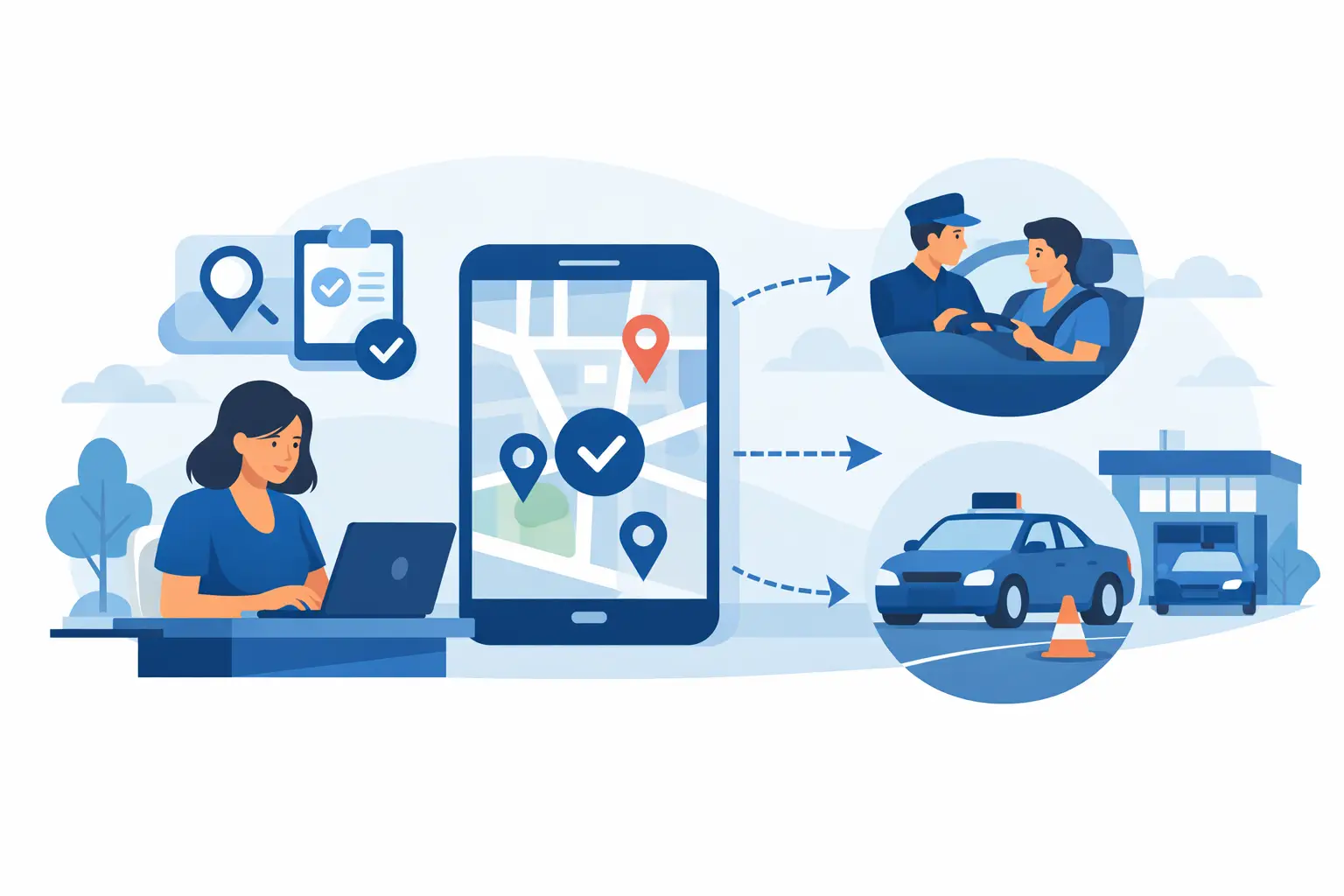
If you have already booked a practical test, you will know the problem straight away. The date you managed to get might be months away, at the wrong test centre, or awkward for your lessons, work or uni schedule. Automatic driving test matching exists to fix that specific problem without forcing you to cancel a booking you have worked hard to secure.
What automatic driving test matching actually means
Automatic driving test matching is not the same as endlessly refreshing the DVSA booking system and hoping a cancellation appears. It is a way of finding another learner driver whose booked test suits you better, while your own booking suits them better too. When both sides line up on date range and test centre preferences, a match is identified and both drivers are alerted.
That matters because many learners are not trying to get any random earlier slot. They need something realistic. Your instructor may only be available on certain days. You may be moving home, starting a job, going back to university or waiting until your lessons are at the right standard. A better test date is only useful if it fits your real life.
With automatic matching, you set your preferences once and let the system look for compatible swaps in the background. That removes the need to keep checking manually and cuts down the risk of missing a suitable opportunity.
Why learners use automatic driving test matching
The biggest reason is simple. Good test dates are hard to find, and cancelling your current booking can be a costly mistake. Once you let go of a confirmed slot, there is no guarantee you will get another one that works any better.
For many people, swapping makes more sense than cancelling. You keep your place in the system while looking for something more suitable. That could mean an earlier date, a later date if you need more practice, or a move to a more convenient test centre.
There is also the time factor. Manual searching sounds manageable at first, but after a few days it becomes draining. You check before work, at lunch, late at night, and still get nowhere. Automatic matching gives you a more practical route. Instead of chasing availability, you wait for relevant alerts.
How the process works in practice
The process is straightforward when it is set up properly. First, you join and list the practical test you already have booked. You then choose the test centres you would accept and the date range that suits you.
From there, the platform compares your booking with others already listed. If another learner wants your slot and has one you would take, the system flags it as a compatible match. You are then contacted so you can decide whether to proceed.
The final swap is still completed through the official DVSA phone line. That point matters. A legitimate service does not try to replace the official booking process. It helps you find a suitable person to swap with, then the change is handled through the proper route.
That combination is what makes the model useful. The hard part is finding the right person at the right time. The official part is making the booking change correctly.
What makes a good match
Not every available test date is a good match, and that is where some learners go wrong. They focus only on getting something sooner. In reality, a good match depends on several things working together.
The test centre has to be right for you. If your instructor does not cover that area, or if you have been training on very different roads, an earlier date may not help. The timing has to be realistic too. If your test gets moved forward by several weeks but your instructor thinks you are not ready, the pressure can do more harm than good.
A good matching system takes those details seriously. It should let you define what you actually want rather than pushing every possible option at you. More alerts are not better if most of them are useless.
The trade-off between speed and flexibility
Most learners want a better date fast, but there is always a balance. If you are flexible on centres and dates, you are more likely to be matched quickly. If you are only willing to swap for one exact week at one exact centre, it may take longer.
That does not mean being flexible is always the right move. If you need a specific centre because of your instructor, or a narrow date range because of work, it is usually better to keep your preferences realistic and wait for a proper fit. A quick swap that creates new problems is not much of a win.
The best approach is usually honest rather than optimistic. Pick the range you can genuinely do. Choose centres you can genuinely reach. That gives the system a fair chance to work without wasting your time.
Why scale matters in automatic driving test matching
Matching only works well when enough people are in the system. A small pool means fewer compatible swaps, longer waits and less chance of finding someone whose booking lines up with yours.
That is why scale matters. A larger nationwide community gives you a better chance of being matched because there are simply more booked tests in circulation. More people means more combinations of dates, centres and preferences. It is one of the biggest reasons some learners get matched in days while others struggle for months trying to sort it out alone.
If you are using a swap platform, this is worth paying attention to. The idea can sound good on paper, but the size and activity of the community make a real difference to the result.
Why free-to-join matters
Learner drivers are rightly wary of paying upfront for promises. If a service asks for money before it has found anything useful, you are taking the risk while they get paid regardless.
A performance-based model is different. Free to join, free to list, and payment only after a successful match is completed removes a lot of friction. It also signals confidence. If the service works, it gets paid. If it does not, you have not wasted money trying.
That kind of structure is especially helpful in this market because timing is unpredictable. Some people match quickly. Some need longer because of tighter preferences. Paying only when the job is done feels fair because it is fair.
Common concerns learners have
The first concern is usually legitimacy. People want to know whether swapping is allowed and whether they are risking their booking. The key point is that the booking change is completed through the official DVSA process. You are not handing over your test to someone informally or using a back-door method.
The second concern is losing control. In practice, a good system should do the opposite. You keep your existing booking while looking for something better, and you choose your preferences in advance. You are not forced into random offers that do not suit you.
The third concern is hassle. That is understandable, because most learners are already juggling lessons, revision, work and everyday life. Automatic matching is useful because it reduces admin. Once your details are listed, the system does the watching for you and alerts you when there is something worth your attention.
Who automatic driving test matching is best for
It is best for learners who already hold a DVSA practical test booking and need a different date or centre without throwing away the booking they have. That includes people who want an earlier test, people who need more time, and people whose original booking no longer fits around their instructor or schedule.
It can be particularly useful if you have been checking for cancellations with no real success, or if you are worried about giving up a valuable slot only to end up worse off. It is also a strong option if certainty matters more to you than gambling on availability.
For learners with very open availability, other routes may sometimes work too. But if you want a more strategic way to change your booking, matching tends to be the safer and less stressful option.
A smarter way to change your test date
The best thing about automatic driving test matching is not just that it can be faster. It is that it is more sensible. You keep the booking you already have, set the terms that work for you, and wait for a compatible swap instead of chasing luck.
That is why services such as DrivingTests.co.uk are built around matching rather than guesswork. When the process is clear, the community is large and the final change is done through the DVSA, changing your test date becomes far less of a gamble.
If your current booking is wrong for your schedule, your readiness or your test centre, there is no reason to sit there refreshing pages and hoping. A better date is often less about luck and more about being matched with the right person at the right time.
Looking to swap your driving test date?
See how it works