Manual Checking Versus Match Alerts for Tests
Published 3 October 2026
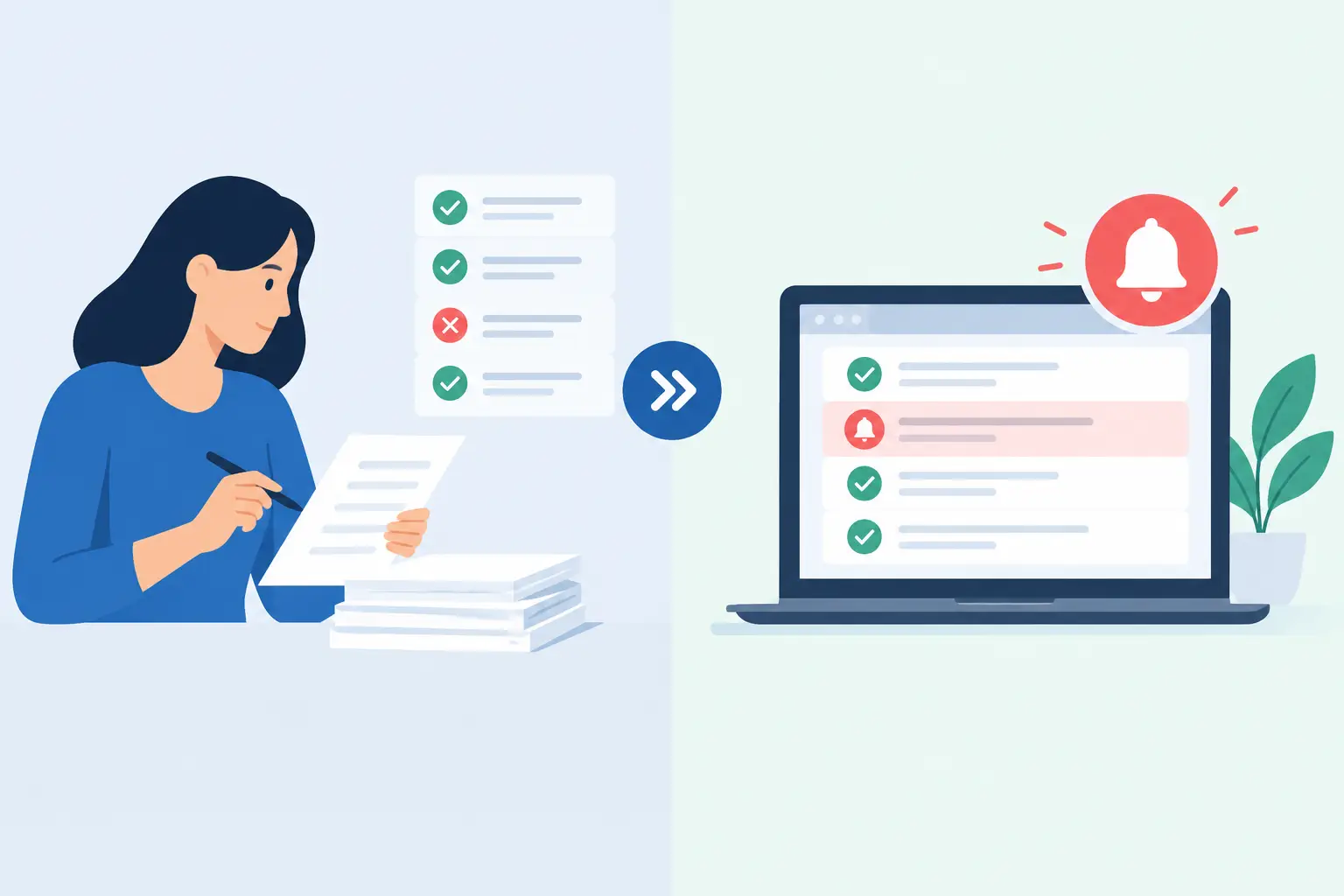
You have a practical driving test booked, but the date is too far away, clashes with work, or no longer suits your instructor. The question is simple: manual checking versus match alerts - which gives you the best chance of finding a better test date without making the process your second job?
For most learners, the real issue is not whether they can check for dates. It is how often they need to do it, what they might miss between checks, and whether changing plans puts their existing booking at risk. A better approach depends on what you need, how flexible you can be, and how much time you can realistically spend searching.
What manual checking actually involves
Manual checking means repeatedly looking for practical test availability yourself. You choose a test centre, search for dates, refresh at different times, and act quickly if a suitable appointment appears.
It can work. Cancellations do happen, and a learner who is flexible on dates, times and centres may find an earlier slot. If you only need a small change and can check regularly during the day, manual searching may be enough.
The problem is that availability is unpredictable. A useful slot can appear while you are in a lesson, at work, in university lectures or simply away from your mobile phone. By the time you check again, somebody else may have taken it.
Manual searching also asks you to make a difficult judgement every time a date appears. Is this date good enough? Should you take it now? Will your instructor be free? Is it worth giving up the booking you already hold? The pressure is not just finding a date. It is making the right decision fast.
Manual checking versus match alerts: the key difference
The biggest difference is where the work happens.
With manual checking, you do the searching. You must keep returning, reviewing availability and hoping a suitable appointment appears at the right moment. You are looking for a gap in the system.
With match alerts, you set out what you already have and what you want instead. That could mean an earlier date, a later date, another test centre, or a date range that fits around lessons and work. The system then looks for another learner whose booking and preferences make a swap possible.
This matters because a date swap is not the same as waiting for a cancellation. You already hold a valuable DVSA test booking. Rather than cancelling it and rejoining the queue, you are trying to exchange it with someone who needs what you have and can offer what you need.
At DrivingTests.co.uk, learners list their current booking, select their preferred centres and dates, and receive email and SMS alerts when a compatible match is found. Joining and matching are free. You only pay if a swap is completed.
When manual checking can make sense
Manual checking is not always the wrong choice. It can suit you if your situation is straightforward and you have plenty of flexibility.
For example, it may be practical when you can take almost any weekday appointment, your instructor has wide availability, and you are happy to travel to several nearby test centres. It can also help if you are only looking for a minor adjustment and can check at regular points in the day.
There is no fee for checking yourself, and you stay in full control of every search. Some learners prefer that direct approach, particularly if they are close to test-ready and are prepared to put the time in.
But free does not always mean cost-free. Constant checking can eat into your day, distract you from lessons and create more stress when dates appear and disappear. If you are checking repeatedly for weeks, the time commitment soon becomes the real price.
Where manual checking falls short
The main weakness is that manual checking relies on timing. You can be organised, persistent and quick, yet still miss the appointment that would have suited you best.
It also creates a risk for learners who have a booking worth keeping. Cancelling a test before you have secured a better option can leave you with nothing. If local waiting times are long, that is a gamble many learners cannot afford.
There is also the practical issue of coordination. Finding an earlier test date is only useful if you can get enough lessons, your instructor can take you, and you feel ready. A date found in a rush may create more pressure than progress.
Manual checking becomes especially frustrating when you need a specific solution, such as moving a test because of a new job, a university timetable, a holiday, relocation or your instructor's availability. The narrower your requirements, the harder it is to rely on random openings.
Why match alerts suit more complex plans
Match alerts are built for learners who have a booking but need it to work better around real life. Instead of searching for every possible opening, you tell the system the conditions that matter to you.
That might mean you have a test in August but need one in June. Or you have a weekday morning booking at one centre and need an afternoon appointment closer to home. Another learner may be in the opposite position: they need a later date, or they want the centre you already have.
A matching system brings those two needs together. It does not guarantee an instant result, because a successful swap still depends on compatible learners being available. However, it removes the need to spend every spare moment checking for appointments that may not fit anyway.
Alerts also give you a clearer process. You know what you have listed, what you are looking for and when there is a genuine opportunity to act. That is far more useful than refreshing a page and hoping.
You keep your place while you look
This is the point many learners care about most. If you already have a practical test booked, it is your safety net. A swap approach lets you look for a better arrangement without casually giving that booking up first.
Once both learners agree to proceed, the final change is completed directly through the DVSA official phone line. That keeps the process legitimate and puts the booking change where it belongs: with the DVSA.
Alerts reduce the chasing
Email and SMS alerts mean you do not have to be online at the exact minute a compatible opportunity appears. You still need to respond and make sure the proposed date works for you, but the search is no longer entirely dependent on your own checking routine.
For working learners, students and anyone sharing decisions with an instructor or parent, that reduction in chasing can make a major difference.
Choosing the right option for your test date
The best route depends on your flexibility and your tolerance for uncertainty.
Manual checking may be suitable if you can travel, accept a wide range of dates and are happy to spend time searching. It gives you direct control, but it also makes you responsible for spotting every opportunity.
Match alerts are usually the stronger choice when you already have a booking you want to protect, need a particular date range or test centre, or cannot keep checking throughout the day. They are also useful when you want a planned exchange rather than a last-minute scramble for a cancellation.
You do not need to treat the two approaches as opposites. Some learners keep an eye on availability while using alerts to look for a more suitable swap. The important part is having a clear plan before you change anything.
Set yourself up for a useful match
Be realistic about what you can accept. Choosing several suitable nearby test centres and a sensible date range can improve your chances, especially if you are not tied to one exact morning or afternoon.
At the same time, do not agree to a date that leaves you underprepared. Speak to your instructor about their availability before committing, and allow time for lessons that focus on the areas you still need to improve. An earlier test is only better if you can take it with confidence.
Check the details carefully when a match appears: the test centre, date, time and whether both sides are happy to proceed. A good swap should solve a problem, not create a new one.
Your current booking has value. Treat it as more than a date in the diary, and choose the route that gives you a better test opportunity without adding unnecessary stress.
Looking to swap your driving test date?
See how it works